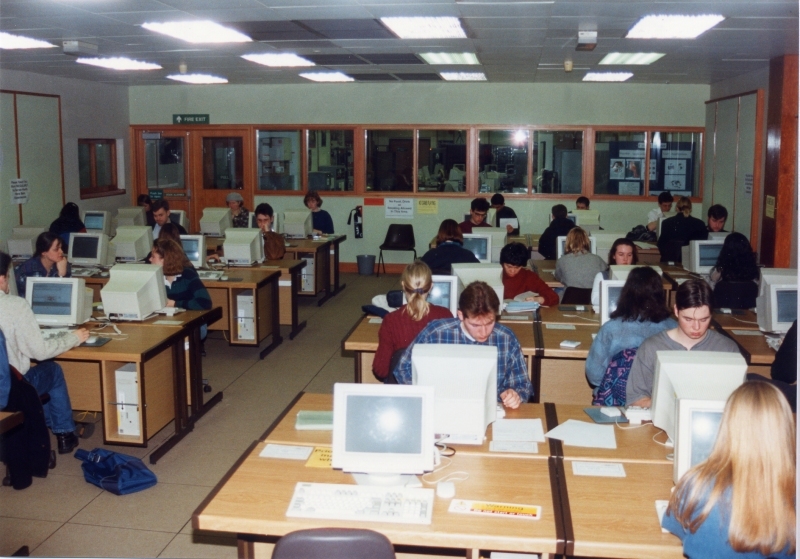
An ICL 1905E processor at the rear taking most of the width of the room ( 32K of 24 bit words genuine core store ). Two communications boxes in front. The tape decks on the left are 7 track - beside them two EDS4 disc drives ( yes 4 Megabytes and disk spelt with a c ). Note the paper tape receiving bin at bottom left - still a feature in the old lower entrance area. John Roper at the console & Alan Coombe far right at a MAXIMOP (MINIMOP?) teletype. Note the paper tape spilling all over the floor - a typical feature of the times. Operating systems run were George 2 for batch jobs from cards ( later George 3 on a 1903T ) and MAXIMOP for interactive work. The last ICL mainframes installed in this room were a pair of 1903Ts one running George 3 or George 4 (the paging version of G3) for batch jobs and the other running MAXIMOP. In 1978/79 the style of equipment started to change with the arrival of Digital Equipment Corporation VAX systems. The end of the British Computer Industry and we started spelling disc with a k . If you looked in this room in 1995 you would have seen hordes of students emailing and word processing on computers each orders of magnitude more powerful than the original single mainframe and today (2013) the room is used as an IT Technicans workshop. Below is another picture of the early days following the change from a 2 disc system to 4 disc. At this time ( approx May 1972 ) Schools could purchase an EDS8 disc cartridge for holding compiled program libraries and these could be loaded on request for specific jobs. There was still no concept of a user filestore as we know it today with most data being held on punched cards, paper tape or magnetic tape.
Here is the original 1905E
Equipment List
and the
Computer Room Plan
also the original User Notice by John Roper for the start of service in 1968
UN0